

Government Polytechnic Palanpur#
Information & Communication Technology#
Progressive Assessment I (September - 2025) - Solutions#
Semester: 5
Subject Name & Code: Cyber Security (4353204)
Date: 04/09/2025
Time: 11:30 AM TO 12:30 PM
Total Marks: 20
Question 1: Answer the following questions [10 Marks]#
Question 1(a) [7 marks]#
Explain various security attacks, mechanisms, and services associated with each layer of the OSI model.
Answer:
OSI Security Framework:
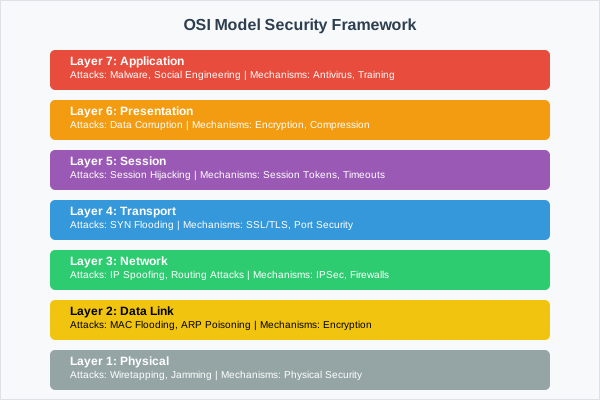
| Layer | Attacks | Mechanisms | Services |
|---|---|---|---|
| Physical | Wiretapping, Jamming | Physical security, Shielding | Access control |
| Data Link | MAC flooding, ARP poisoning | Encryption, Authentication | Frame integrity |
| Network | IP spoofing, Routing attacks | IPSec, Firewalls | Packet filtering |
| Transport | Session hijacking, SYN flooding | SSL/TLS, Port security | End-to-end security |
| Session | Session replay, Hijacking | Session tokens, Timeouts | Session management |
| Presentation | Data corruption, Format attacks | Encryption, Compression | Data transformation |
| Application | Malware, Social engineering | Antivirus, User training | Application security |
Key Security Services:
- Authentication: Verifying user identity
- Authorization: Controlling access permissions
- Non-repudiation: Preventing denial of actions
- Data integrity: Ensuring data accuracy
Mnemonic: “All People Seem To Need Data Protection”
Question 1(b) [3 marks]#
Describe CIA triad with example.
Answer:
CIA Triad Components:
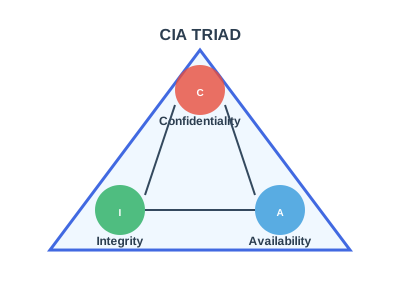
| Component | Definition | Example |
|---|---|---|
| Confidentiality | Protecting data from unauthorized access | Password protection on bank accounts |
| Integrity | Ensuring data accuracy and completeness | Digital signatures on documents |
| Availability | Ensuring systems are accessible when needed | 24/7 online banking services |
- Confidentiality: Only authorized users can access sensitive information
- Integrity: Data remains accurate and unaltered during transmission
- Availability: Systems remain operational and accessible to legitimate users
Mnemonic: “CIA Keeps Information Safe”
Question 2: Answer the following questions [10 Marks]#
Question 2(a) [7 marks]#
Explain working of packet filter and application proxy.
Answer:
| Firewall Type | Working |
|---|---|
| Packet Filter | Examines packet headers based on predefined rules. Makes decisions based on source/destination IP addresses, ports, and protocols. Works at OSI network and transport layers. Offers high-speed filtering with low resource usage. |
| Application Proxy | Acts as intermediary between client and server applications. Processes all traffic at application layer. Creates two connections (client-to-proxy and proxy-to-server). Provides content inspection and user authentication capabilities. |
Diagram:
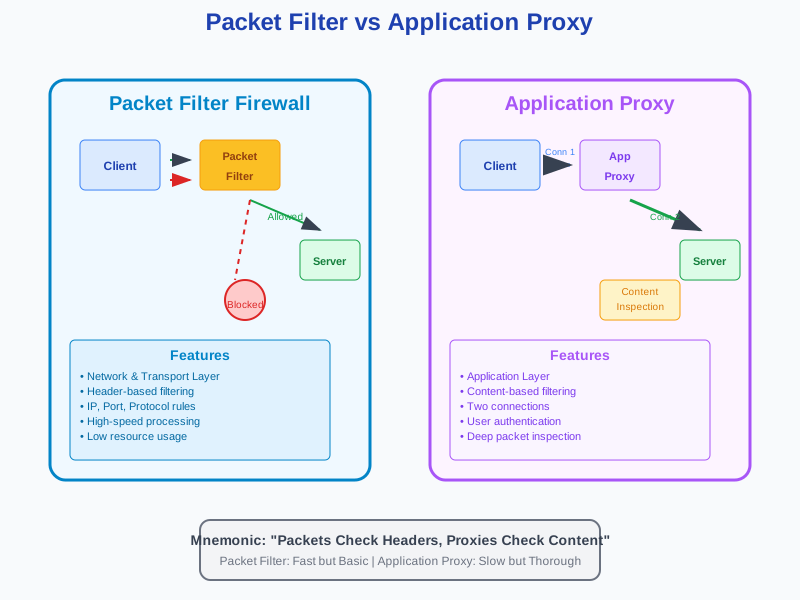
Key Differences:
| Feature | Packet Filter | Application Proxy |
|---|---|---|
| Speed | Fast | Slower |
| Security | Basic | Advanced |
| Resource Usage | Low | High |
| Content Inspection | Header only | Full content |
Mnemonic: “Packets Check Headers, Proxies Check Content”
Question 2(b) [3 marks]#
What is authentication? Explain different methods of authentication.
Answer:
Authentication Definition: Process of verifying user identity before granting system access.
Authentication Methods:
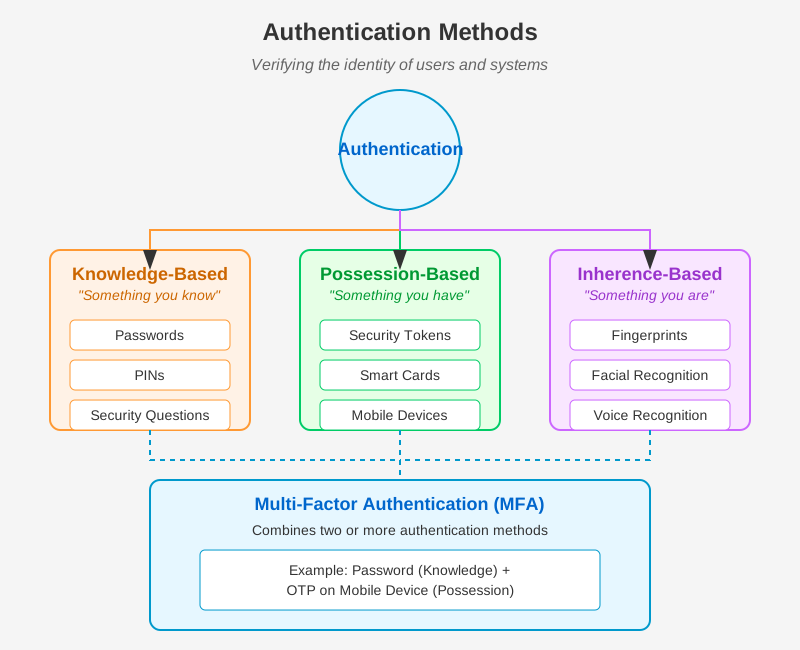
| Method | Description | Example |
|---|---|---|
| Password | Something you know | PIN, passphrase |
| Biometric | Something you are | Fingerprint, iris |
| Token | Something you have | Smart card, USB key |
- Single-Factor: Uses one authentication method
- Multi-Factor: Combines multiple methods
- Two-Factor (2FA): Uses exactly two factors
Mnemonic: “Password Biometric Token Authentication”
Alternative Set Questions#
Alternative Q1: Answer the following questions [10 Marks]#
Alternative Q1(a) [7 marks]#
Explain MD5 hashing and Secure Hash Function (SHA) algorithms.
Answer:
Hash Function Comparison:
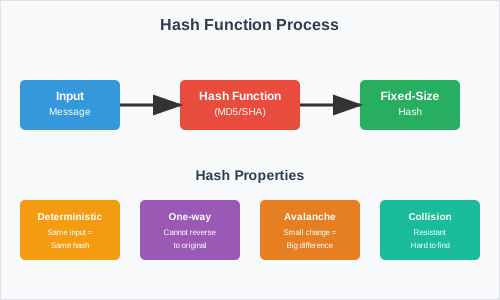
| Feature | MD5 | SHA-1 | SHA-256 |
|---|---|---|---|
| Output Size | 128 bits | 160 bits | 256 bits |
| Security Level | Weak | Weak | Strong |
| Speed | Fast | Moderate | Slower |
| Current Status | Deprecated | Deprecated | Recommended |
MD5 Algorithm Process:
- Input Processing: Message is padded and divided into 512-bit blocks
- Initialization: Sets up four 32-bit registers with fixed values
- Compression: Processes message in 16-word blocks through four rounds of operations
- Output: Produces 128-bit digest as final hash value
SHA Algorithm Features:
- Deterministic: Same input produces same hash
- Avalanche Effect: Small input change causes major hash change
- One-way Function: Cannot reverse hash to original data
- Collision Resistant: Difficult to find two inputs with same hash
Applications:
- Password storage and verification
- Digital signatures and certificates
- Data integrity verification
Mnemonic: “Hash Always Produces Same Output”
Alternative Q1(b) [3 marks]#
Explain Public key and Private Key cryptography.
Answer:
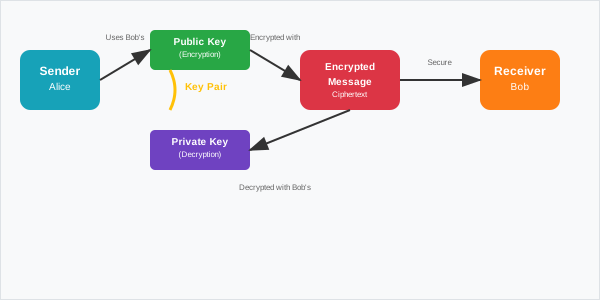
Public Key Cryptography (Asymmetric):
Key Characteristics:
| Feature | Public Key | Private Key |
|---|---|---|
| Distribution | Freely shared | Kept secret |
| Usage | Encryption/Verification | Decryption/Signing |
| Security | Can be public | Must be protected |
- Public Key: Used for encryption and signature verification
- Private Key: Used for decryption and digital signing
- Security: Based on mathematical complexity (RSA, ECC algorithms)
Example: In RSA encryption, if Alice wants to send Bob a message:
- Alice encrypts with Bob’s public key
- Only Bob can decrypt using his private key
Mnemonic: “Public Encrypts, Private Decrypts”
Alternative Q2: Answer the following questions [10 Marks]#
Alternative Q2(a) [7 marks]#
Explain different types of malicious software and their effect.
Answer:
Malware Classification:
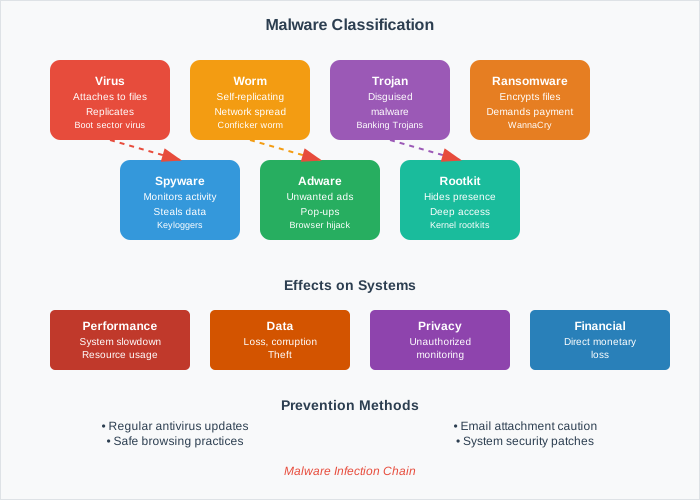
| Type | Behavior | Effect | Example |
|---|---|---|---|
| Virus | Attaches to files | File corruption | Boot sector virus |
| Worm | Self-replicating | Network congestion | Conficker worm |
| Trojan | Disguised malware | Data theft | Banking Trojans |
| Ransomware | Encrypts files | Data hostage | WannaCry |
| Spyware | Monitors activity | Privacy breach | Keyloggers |
| Adware | Shows unwanted ads | Performance degradation | Pop-up ads |
| Rootkit | Hides presence | System compromise | Kernel rootkits |
Effects on Systems:
- Performance: Slow system response
- Data: Loss, corruption, or theft
- Privacy: Unauthorized monitoring
- Financial: Direct monetary loss
Prevention Methods:
- Regular antivirus updates
- Safe browsing practices
- Email attachment caution
- System security patches
Mnemonic: “Viruses Worms Trojans Really Steal All Resources”
Alternative Q2(b) [3 marks]#
What is firewall? List out types of firewalls.
Answer:
Firewall Definition: Network security device that monitors and controls incoming/outgoing traffic based on security rules.
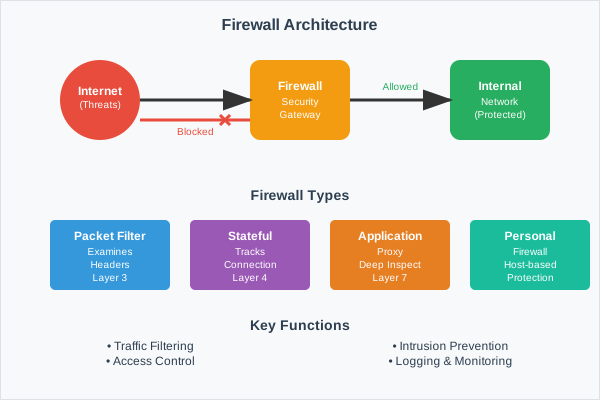
Types of Firewalls:
| Type | Function | Level |
|---|---|---|
| Packet Filter | Examines packet headers | Network Layer |
| Stateful | Tracks connection state | Transport Layer |
| Application Proxy | Inspects application data | Application Layer |
| Personal Firewall | Protects individual devices | Host-based |
- Hardware Firewall: Dedicated network appliance
- Software Firewall: Installed on individual computers
- Cloud Firewall: Delivered as a service (FWaaS)
Mnemonic: “Firewalls Protect Networks Always”
Legend:
- CO1, CO2: Course Outcomes
- A: Apply level
- U: Understand level